
Professional Floor Screeding Kiveton Park South Yorkshire (S26) Area: You should speak to a floor screeding specialist in Kiveton Park if you are aiming to install under floor heating, have a damaged or uneven floor or are renovating a property or basement. To provide a firm foundation for your choice of top flooring material, a screed is used to create a smooth floor surface on top of a rough concrete sub-base. Screeding a floor allows you to provide a durable, quality finish for any part of your property.

FLOOR SCREEDING CONTRACTORS KIVETON PARK
Whatever size room you're renovating, a local floor screeding company in Kiveton Park will be able to supply the expertise and proper working methods to generate a perfect base for your floor. After assessing your project they will advise you on the optimal choice of screed and which strategy for applying it is most suitable for your circumstances.
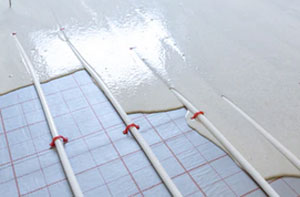
A professional screeding contractor will also let you know if a structural engineer is necessary for your project, to evaluate point loadings, load bearing and flex strength that your screed floor may need to conform with current British Standards and building regulations.
Bringing in a skilled and highly trained flooring specialist will ensure you use the appropriate form of screed for the room's intended usage to extend the lifespan of your floor. A correct blend of screed and the techniques used for laying it are also vital to guarantee the final durability of your floor surface.
There are a number of screeding contractors in the Kiveton Park area so try to get multiple price quotes for your screeding project before selecting a company and know to what standard of finish it's for. The SR (Surface Regularity) finish is the figure to keep your eye on when getting an estimate from your Kiveton Park screeding contractor. Each of the 3 SR levels provide different qualities of finish, with SR1 offering the highest, with the least amount of deviation over the area. An SR2 or SR3 standard may mean there are ridges or flat spots that could cause issues when putting down your final floor surface.
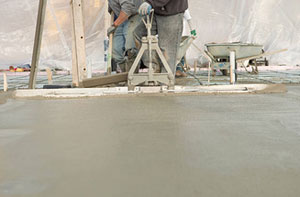
The rules and regulations specified in the British Standards BS8204 must be followed by all Kiveton Park floor screeding companies and they must also hold accreditation with the manufacturers of any specialist screeding materials (Gypsol, Flowcrete, Cemfloor etc.) to confirm their safe working practices and competence. The assessment and training of a floor screeding contractor by a manufacturer is emphasised through the accreditation scheme, and gives assurances of reliability and safe working practices on any screeding project which involves their materials.
For the screeding of floors in factories, hospitals, pubs, shops, warehouses and schools, dedicated Kiveton Park commercial screeders will be required.
TYPES OF SCREED
Standard Screeds - A mix of cement and sand which is ideal for standard residential usage. The standard screed is a mixture of 5 parts sand to one of cement. Once laid this 5:1 ratio will dry at a rate of one millimetre each day.
Fast Drying and Advanced Drying Screeds - If there is a need to move forward urgently with the work due to time restraints, this screed dries much quicker than standard screeds. Most of the fast drying screeds are fibre reinforced and are suitable for a wide range of projects where the faster drying rate of three to seven millimetres is an advantage.
Fibre Reinforced Screed - Used with under floor heating and is the preferred choice in such projects. The fibres in this screed increase overall durability and strength while also safeguarding against thermal cracking and shrinkage. It dries at the same rate as a standard screed, at about one millimetre per day.
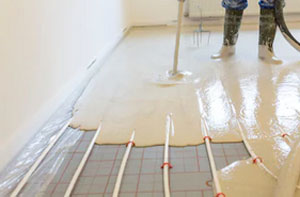
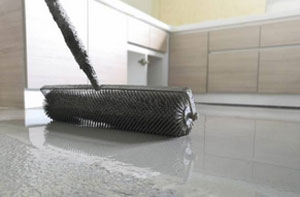
Self-Levelling or Liquid Screeds - A cement and latex mixture which can produce the highest standard SR1 finish. It's mostly needed to provide a smooth, clean floor over a poor quality or damaged substrate and results in a finish onto which all forms of flooring materials can be laid. The liquid screed can be laid to a depth of only 1mm, but will still provide a high strength surface to take a selection of flooring materials.
Polymer Screeds - When a reduced thickness of floor is necessary due to building requirements, a polymer screed offers a high strength resolution to this problem. Polymer screeds are available from many screed manufacturers and because of their varying chemical compositions have distinct drying times for each individual product.

Industrial and Heavy Duty Screed - A screed that's designed for high load and heavy traffic areas where the maximum possible durability and strength is essential.
SCREEDING PREPARATION AND INSTALLATION
To ensure the screeding is of a high quality finish that is hard wearing and durable, time should be spent on fully preparing the area prior to any screeding material being poured. It's important that all contaminants such as oil, grease, loose debris or paint is eliminated from the floor surface before laying any screed, as these can affect the adhesion capability that a quality screed requires.
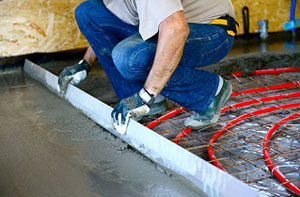
Any cleaning chemicals which are used in this stage should leave no residues, and the floor base must be permitted to dry out naturally. If screeding over a stone or cement floor any cracks should be repaired to prevent them from "travelling" up through the screed layer and causing deviations on the finished surface. During a site survey the screeding specialist will establish what preparation work is needed before starting to work on screeding the floor.
A damp proof membrane (DPM) will be applied once the preparation work has been concluded to stop ground moisture affecting the flooring materials and screed. The damp proof membrane is made of thick polythene sheeting and various layers may be used to act as a moisture barrier for the screeding.
If your house is located in an area where radon gas is found an additional barrier layer is needed to prevent radon gas from entering. An airtight membrane might be enough in areas with low radon measurements, but in more extreme situations there may have to be a more sophisticated ventilation and extraction system to block any ground penetrating radon gas.
The final stage of the surface preparation process is the painting or spraying of a sealant or primer. Sealers and primers assist with the bonding process and are specialist applications according to the type of screed that is being used. These substances require trained tradesmen to apply them in the right proportions by using custom-made equipment, such as airless sprays.
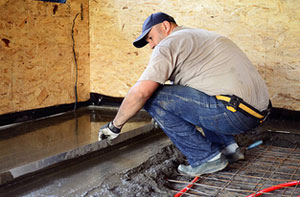
If you're installing underfloor heating, this is the time that it will need to be correctly set out and installed. The under floor heating system will be carefully positioned and firmly attached to insulation panels to avoid any movement in the course of the screed pouring. Underfloor heating is one of the most efficient ways to heat a room and an expertly installed system will produce even warmth all over the floor.
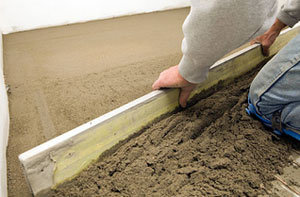
If you're not putting in underfloor heating the screed can now be prepared on site and laid. Your screeding company will give you guidance and advice on which screed type is suitable for your requirements, in line with your intended use of the room. After the pouring of the screed there will be at least 24 hours (for quick drying screeds) before you are able to walk upon the surface, and a 72 hrs minimum curing time before the laying of any floor coverings. Such timescales will be longer for standard and heavy duty screeds and the manufacture's guidelines should be followed to the letter to create the best finish and durability of the floor.
The SR level of your screeding can be confirmed once it has hardened enough to be stepped onto. The standard SR test involves the use of a 2 mtr long straight-edge to check for any fluctuations in the screeded surface.
- SR1 - Over the whole screed area, if there aren't any disparities greater than 3 millimetres from the straight-edge, then you've got a top quality SR1 level surface.
- SR2 - If the floor deviates from the straight edge by 5mm or less it is classified as SR2 level and is the normal standard for commercial and industrial projects.
- SR3 - SR3 is basic utility standard where a perfect quality finish isn't needed. This specification can have a maximum permissible deviation of ten millimetres.
If you need to check the floor for load bearing, a structural engineer is needed to conduct the tests. The assessment will make sure that your newly laid screeded surface is viable for the load bearing requirements specified in the original site survey. This will include what is known as a drop hammer test which assesses various aspects of the flexibility and strength of the screed. Any screed floor that's got point load requirements must be okayed by a certified structural engineer obeying the BS8204 regulations. (Tags: Floor Screeding Kiveton Park, Floor Screed Kiveton Park, Screeding Kiveton Park, Floor Screeding Services Kiveton Park).

Floor screeding services are available in Kiveton Park and also in nearby places like: Brampton-en-le-Morthen, North Anston, South Anston, Todwick, Wales Bar, Shireoaks, Norwood, Dinnington, Waleswood, Harthill, Swallownest, Upperthorpe, Woodhall, Killamarsh, Woodsetts, Thorpe Salvin, and in these postcodes S26 5PB, S26 5PL, S26 5PZ, S26 6PR, S26 6PT, S26 5QB, S26 5QE, S26 6NB, S26 6RX, S26 6SS. Local Kiveton Park floor screeders will most likely have the dialling code 01909 and the postcode S26. Checking this out can ensure you are accessing local floor screeding. Kiveton Park home and business owners are able to benefit from these and many other floor related services.
Granolithic Screeding
Granolithic screeding is a process of creating an even and smooth surface for floor coverings like carpets or tiles. It involves mixing sand, aggregate and cement to form a mixture, which is then applied to a concrete base. The mixture is levelled with a straight edge to give it a smooth surface.
The resulting flooring is easy to clean, hard-wearing and slip-resistant, making it ideal for use in areas with high foot traffic, such as schools, shopping centres and factories.
The granolithic screeding process involves a number of steps, including preparing the concrete base, blending of the screed mixture, laying of the mixture, and curing of the screed. Proper mixing, application and curing methods are important to ensure the durability and strength of the granolithic screed. In addition, the screed should be allowed to cure fully before any flooring materials are installed over it.... READ MORE.
What Does Screeding Do?
Several essential purposes are served by screeding in construction projects:
- Structural Integrity and Stability.
- The Even Distribution of Loads.
- Compatibility with Floor Finishes.
- Smoothing and Levelling.
- Improving Sound and Thermal Insulation.
- Underfloor Heating System Support.
- Surface Protection.
- Corrections to Subfloors.
Overall, screeding assumes a vital role in the creation of a durable, level and stable floor surface. By maintaining a solid foundation, it enables the floor finish to uphold its aesthetics and quality, and endure the demands of day-to-day use for years to come.
Subfloor Repair Before Screeding
The repair of a subfloor before screeding is one of those steps that is easy to overlook, although it makes a big differance once the screed has gone down. Any cracks, loose patches, or weak spots in the base need to be sorted out first, otherwise the screed can fail or start to break up later on. Its usually a case of cleaning everything back, removing debris, and repairing any damaged areas with suitable fillers or bonding agents so that the surface is sound & stable. If there are dips or uneven sections in the subfloor, these can be levelled out during the prep work to avoid any issues further down the line. A thorough check for damp is also worth doing, since moisture can cause all sorts of trouble if it gets trapped beneath the screed. Getting the subfloor right might feel like extra work, although doing it will help the screeding to bond properly and give a smoother, longer-lasting finish overall.
Coloured Floor Screeds
A flooring material mostly used in industrial or commercial settings is coloured floor screeds. By mixing coloured resins, aggregates, and sealants, these screeds are produced, resulting in a one-of-a-kind, decorative finish. Due to their slip resistance and durability, they are frequently employed in areas with heavy foot traffic or machinery.
Coloured screeds can be tailored to match the branding of a business, or to create a particular visual effect in a space. Facilities that demand a high standard of hygiene often select them due to their ease of cleaning and maintenance. Coloured screeds are a great flooring option for cleanrooms and similar environments because they provide a seamless finish that eliminates joints or grout lines. Overall, coloured screeds are a versatile and practical flooring solution that can add both function and style to any commercial or industrial space.
Screed Reinforcement
Improving the durability and strength of concrete screeds can be achieved by using screed reinforcement. Flat, thin layers of concrete known as screeds are applied to a base layer to create a level surface. They find common use in construction projects as flooring, but they can also be utilised as a finishing layer for walls and ceilings.
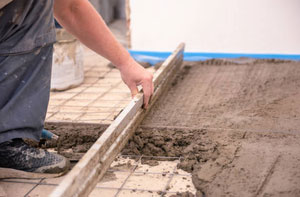
To prevent cracking and increase strength, reinforcement materials like steel mesh, polypropylene fibres or wire are mixed into the screed during installation. The reinforcement helps the surface to evenly distribute load and weight, as well as improve its ability to resist thermal changes, impact and abrasion.
By decreasing the risk of cracking and shrinkage caused by changes in temperature or humidity, the reinforcement process improves both the strength and durability of screeds. By ensuring the structural integrity and quality of screeds, screed reinforcement provides a long-lasting and reliable surface suitable for various applications, making it an essential aspect of the screeding process.
Acid Etching Concrete Kiveton Park
The process of acid etching is used to get concrete surfaces ready for finishing. It includes applying a mixture of water and acid to the concrete to clean and texture the surface. This process optimises the surface for coatings or sealants, leading to a longer-lasting and more durable finish due to enhanced adhesion.

The process begins with a thorough cleaning of the concrete surface to eliminate grease, dirt and debris. After the surface is clean, the acid solution is applied uniformly to the concrete. A slightly rough texture, ideal for paint, sealant, or other coating adhesion, is created when the acid reacts with the concrete.
Acid etching concrete involves working with hazardous materials, so safety is essential. To avoid skin and eye contact with the acid, it's essential to wear protective gear including goggles, gloves, and a mask. Even better, hire a specialist to handle it.
Once the acid has performed its magic, the concrete is thoroughly rinsed with water to neutralise and remove any remaining residue. Consequently, the surface is prepared for the next step in the finishing process, whether it includes painting, sealing or staining. (Acid Etching Concrete Kiveton Park)
Latex Screeding Kiveton Park
When the surface of a floor needs a bit of flexibility, it is better to use a latex self-levelling screeding. A latex floor screed comes in 2 parts, a bag and a bottle, with the bag containing a cemetitious powder, and the bottle containing a liquid latex. The latex liquid solution actually replaces the water which would typically be used in a screed mix, and is far more flexible and quicker drying than standard screeds.
This latex screed compound is used to level-out a subfloor before the final decorative surface is laid. Giving a resilient and smooth surface that's perfect for the application of adhesives, this screeding is is appropriate for use on subfloors of concrete, wood, sand/cement, asphalt and quarry tiles. If your subfloor has any movement in it, this type of screeding will produce a flexible, crack-free finish, on which your chosen floor coverings can be laid.
When a screed is being laid over a membrane of either acoustic or thermal insulation (i.e. a floating screed), latex floor screeds are not appropriate, because in such cases (generally when screeding on top of underfloor heating), you will likely need a thickness of 50 to 65 millimetres.
The Tools Needed for Screeding Floors
- Dappling Bar
- Buckets
- Straight Edge
- Tape Measure
- Knee Protectors
- Spirit Level
- Float
- Trowel
- Spade
- Floor Profiler
- Gloves
 FAQ: Here are a selection of the most frequently asked questions about screeding: What is fast drying screed? Can screed be sanded? How do you level a floor with screed? How do you know if screed is dry? What conditions are best for screeding? How is screeding priced? When can flooring be laid after screeding? What is screeding? Hopefully most of these frequently asked questions will have been answered in the main article.
Related Tasks

There is a variety of work that can be carried out by your local Kiveton Park floor screeding company including monolithic floor screeding, floor preparation, cellar floor screeding Kiveton Park, floor screeding quotations Kiveton Park, sand screed, lightweight screeding Kiveton Park, conservatory screeding in Kiveton Park, acoustic flooring solutions, screed reinforcement, smoothing compounds, pumped screeds, thin bed floor screeding Kiveton Park, floor screeding tools, fibre reinforced screeding in Kiveton Park, sand and cement screeds, concrete pumping, floor noise dampening Kiveton Park, domestic screeding, floor screeding in Kiveton Park, underfloor insulation in Kiveton Park, latex floor screeding, floor resurfacing, concrete moisture testing Kiveton Park, self-levelling floor screeding, polished concrete flooring, decorative floor screeding Kiveton Park, liquid screeds in Kiveton Park, and more floor screeding tasks. These are just a selection of the activities that are carried out by those specialising in screeding. Kiveton Park specialists will inform you of their entire range of services.
Floor Screeding Near Kiveton Park
Also find: Woodhall screeding services, South Anston screeding services, Swallownest screeding services, Todwick screeding services, Shireoaks screeding services, Dinnington screeding services, Norwood screeding services, Woodsetts screeding services, Harthill screeding services, Brampton-en-le-Morthen screeding services, Upperthorpe screeding services, North Anston screeding services, Wales Bar screeding services, Killamarsh screeding services, Waleswood screeding services, Thorpe Salvin screeding services and more. Most of these places are catered for by companies who do screeding. Kiveton Park business and home owners can get screeding price quotes by clicking here.
Floor Screeding Services Kiveton Park

- Screed Calculator Service
- Floor Insulation
- Fibre Reinforced Screeding
- Floor Levelling
- Underfloor Heating Installations
- Industrial Floor Screeding
- Floor Screeding Advice
- Floor Screeding
- Cheap Screeding
- Liquid Screeds
- Screeding Services
- Fast-Dry Screeding
- Final Floor Finishes
- Polished Screed Floors
 Floor Screeding Kiveton Park
 Screeding Near Me
 Floor Screeders Kiveton Park
More: Self-Levelling Screeds, Bonded Screed, Screeding, Surface Patching, Concrete Screeding, Traditional Screeding, Screeding Services, Screed Reinforcement, Screeding, Concrete Screeding, Cheap Screeding, Flowing Screed, Self Levelling Screed, Concrete Screeding, Liquid Screeding, Liquid Screeding, Floor Repairs, Concrete Screeding, Kitchen Floors, Kitchen Floors.
For the latest local Kiveton Park info take a look here
Floor screeding in S26 area, phone code 01909.
TOP - Floor Screeding Kiveton Park
Floor Screed Companies - Self-Levelling Screeding - Commercial Screeding Kiveton Park - Screeding Kiveton Park - Quick-Dry Screeding - Floor Screeding Services Kiveton Park - Floor Screeding Kiveton Park - Floor Screeding Near Me - Screeding Quotations