
Professional Floor Screeding Glenfield Leicestershire (LE3) Area: If you are undertaking property or basement renovation, tackling a damaged or uneven floor, or exploring the installation of underfloor heating in your Glenfield residence, it is essential to engage the services of a skilled floor screeding contractor. The primary aim of screeding is to establish a seamless and even surface above a concrete sub-base, establishing a sturdy foundation for your selected flooring material. This important system produces a sturdy and premium finish for the complete floor structure, guaranteeing its robustness and permanency. With a floor screeding professional at your side, you can confidently expect the attainment of a flawless and enduring floor surface that fulfils your unique requirements.

FLOOR SCREEDING EXPERTS GLENFIELD
It doesn't matter how big or small the room is that you need levelling, a trustworthy floor screeding company in Glenfield will have the appropriate equipment, knowledge and expertise to give you an outstanding standard of service. To determine the appropriate type of screed you need, and the best way to apply it, they will do a proper evaluation of your project.
It may be necessary, depending on the intended use of the area in question, for a survey by a structural engineer to abide by building regulations on flex strength, load bearing and point loadings of the screed floor.
Qualified and skilled tradespeople are imperative for a successful result and will extend your floor's lifespan by using the correct type of screed for your room's intended purpose. There are many kinds of floor screed and picking the appropriate mix and installation approach is critical to create a high quality floor which is durable and fit for purpose.
Ensure you get two or three estimates for your Glenfield based screeding project and also ask what standard of finish each quote is for. For residential homes a quotation will normally be given for an SR (Surface Regularity) level of SR1 or SR2. SR2 and SR3 might be more affordable options, however the finished floor surface may have deviations and errors, whilst SR1 guarantees a pretty much perfect quality of finish. This means you may have to correct any patches that may cause problems when laying your finished flooring solution.
The rules and regulations set out in in the British Standards BS8204 have to be followed by all Glenfield floor screeding companies and they must also hold accreditation with the manufacturers of any specialist screeding materials (Flowcrete, Gypsol, Cemfloor etc.) to substantiate their competence and safe working practices. The testing and training of a floor screeding contractor by such manufacturers is emphasised by the use of the accreditation scheme, and gives assurances of safe working practices and reliability on any flooring project involving their materials.
Glenfield commercial screeders may be involved in the screeding of floors in factories, pubs, warehouses, hospitals, shops and schools.
TYPES OF SCREED
Standard Screeds - Frequently used in domestic flooring projects where the mixture of cement and sand is okay for normal floor traffic usage. 5 parts sand to 1 part cement is the usual mixture for standard screeds. This five to one ratio standard flooring screed will dry out at a rate of just one millimetre per day after application.
Fibre Reinforced Screed - The favourite choice of professional contractors for use with under floor heating systems. This is because of the improved durability and protection against thermal shrinkage and cracking offered by the fibres within the screed. The screed will dry out at a rate of roughly 1mm/day.
Industrial and Heavy Duty Screed - A screed that's designed for high load and heavy traffic areas where the maximum possible durability and strength is essential.

Fast Drying and Advanced Drying Screeds - If you have to progress urgently with the work due to time constraints, this screed dries more speedily than standard flooring screeds. They are generally a fibre reinforced type of screed that dries out at a rate of between three and seven millimetres per day and are used in time-sensitive flooring projects.
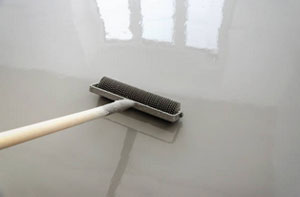
Self-Levelling or Liquid Screeds - A cement and latex material which can produce the highest standard SR1 finish. This self-levelling compound provides a clean and level surface over a rough substrate or damaged floor to enable all flooring materials to be laid. The liquid screed can be laid to a depth of just one millimetre, but still provides a high strength surface for a wide variety of flooring finishes.
Polymer Screeds - An extremely high strength solution where a reduced thickness is necessary. The curing times vary as outlined by proprietary product guidelines.
SCREEDING PREPARATION AND INSTALLATION
To enable the screeding to be of a good quality finish that's hard wearing and durable, time should be spent on preparing the area before any screeding material is poured. The existing floor surfaces should be cleaned to remove any oil, debris, grease and paint which might affect the bond of the screeding.
Any cleaning products used in this phase should leave no residues, and the floor base must be allowed to dry out naturally. If screeding over a cement or stone floor all cracks should be repaired to stop them from "travelling" up through your screed layer and causing imperfections on the finished floor surface. A trustworthy Glenfield screeding installer will take note of such issues during a site survey and ensure that all preparations are complete before applying the next stages of the screeding process.
A damp proof membrane (DPM) will be put down once the preparation work has been done to prevent ground moisture getting into the screeding and floor materials. There might be two or three layers of different thickness polythene to act as a barrier between the insulation layer and screed.
If the area is at risk from radon then another barrier is essential to stop this harmful gas from entering from the ground. This can be as simple as an air-tight membrane, or in more serious instances an extraction and ventilation system is installed under the screed to draw out any inflow of air and gas from ground level.
The final phase of the surface preparation process is the spraying or painting of a sealer or primer. Primers assist with the bonding process and are specialist applications according to the type of screed being applied. Custom-made equipment such as airless sprays can be used to apply a sealant or primer, which should be done by certified screeding companies in Glenfield observing the manufacturer's guidelines and safety advice.
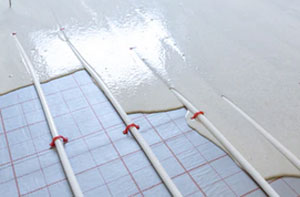
Now is the time that underfloor heating can be laid out in the correct manner and installed. Insulation panels can be put in place and the heating pipes and cabling will be firmly fastened so that there is no movement while the screed is being poured. When skillfully installed an underfloor heating system is an effective way to warm a room and high quality screeding will retain its heat, producing an even heat right across the floor.
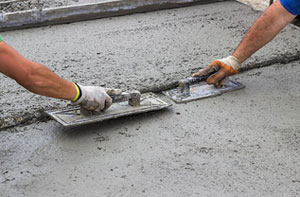
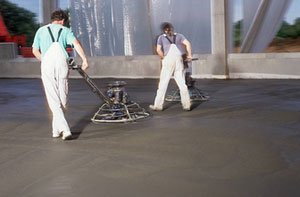
The screed can now be mixed and prepared in situ and applied to the base. The requirements of the room will determine the form of screeding that is used. Bear in mind that even advanced and quick drying screeds have a minimum of twenty four hours before you can walk on any screeded surface and at least three days before any flooring materials can be applied. Manufacturer's drying guidelines for standard and heavy duty screeds must be followed in order to achieve a quality finish and end up with an even and stable floor surface.
Once the screeding has solidified it can be quality checked to establish its SR level. Through the use of a two metre straight-edge the floor surface is examined for any deviations, ridges and dips in the surface of the screed.
- SR1 - Over the whole floor area, if there are no disparities of more than 3mm from the straight-edge, then you have a top quality SR1 level surface.
- SR2 - The standard flooring in commercial and industrial builds is normally SR2 and has a maximum possible deviation of five millimetres across the entire floor.
- SR3 - For other floors where the finish is fairly immaterial the SR3 is the standard and has a deviation measurement of ten millimetres or less.
It may also be necessary for a structural engineer to conduct a soundness test. Using specialised equipment the structural engineer will establish the screeding strength and its suitability for use in a load bearing setting. The screed layer will be given a drop hammer test to measure strength and flexibility at specific points. Only qualified structural engineers applying the BS8204 regulations are allowed to perform such tests and sign off on the structural integrity of the screeding. (Tags: Floor Screeding Services Glenfield, Screeding Glenfield, Floor Screed Glenfield, Floor Screeding Glenfield).
Floor screeding services are available in Glenfield and also in nearby places like: Groby, Thorpe Astley, Desford, Markfield, Braunstone, Bagworth, Barlestone, Stanton under Bardon, Anstey, Newtown Linford, Kirby Muxloe, Leicester, Leicester Forest East, Birstall, Ratby, and in these postcodes LE3 8FF, LE3 8FT, LE3 8AR, LE3 8EY, LE3 8PH, LE3 8PW, LE3 8AB, LE3 8DL, LE3 8FP, LE3 8BR. Local Glenfield floor screeders will likely have the telephone code 0116 and the postcode LE3. Checking this out will confirm you are accessing local screeding. Glenfield property owners can benefit from these and numerous other related services.
Granolithic Screeding Glenfield
Granolithic screeding is an extremely popular flooring material that is used widely in heavy-duty environments because of its strength and durability. It is made from a mixture of aggregate, sand, cement, and sometimes pigments, which are combined to form a mortar-like mixture. The mixture is poured onto the floor and then smoothed out to a level surface.
Granolithic screeding is commonly used in commercial and industrial buildings and also in high-traffic areas in residential buildings. It is also commonly used in areas where abrasion and chemical resistance are required. The resulting surface is smooth and hard, which makes it easy to maintain and clean, and provides a perfect base for other flooring products.
The granolithic screeding process involves preparation of the concrete sub-base, mixing the screed mixture, laying the mixture, and giving it time to cure. Appropriate application and curing techniques are vital for the strength and longevity of the screed. The screed must be fully cured before any additional flooring is installed.... READ MORE.
Screed Reinforcement
Screed reinforcement improves the durability and strength of concrete screeds by reinforcing them. Screeds are flat, thin layers of concrete that are applied to a base layer to create a level surface. Commonly, they are used in construction projects as flooring, but they can also function as a finishing layer for ceilings and walls.
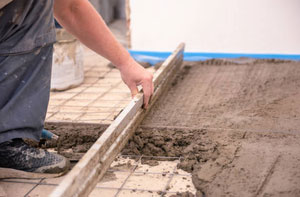
Screed mixture during installation is infused with reinforcement materials, such as steel mesh, wire or fibres, to increase strength and prevent cracking. Weight and load are evenly distributed across the surface by the reinforcement, which also improves its ability to resist abrasion, thermal changes and impact.
By reducing the risk of cracking and shrinkage caused by humidity or temperature changes, screed reinforcement improves both the durability and strength of screeds. Screed reinforcement is crucial for maintaining the structural integrity and quality of screeds, providing a reliable and long-lasting surface for a range of applications.
Subfloor Repair Before Screeding
The repair of a subfloor before screeding is one of those steps that is easy to overlook, although it makes a big differance once the screed has gone down. Any cracks, loose patches, or weak spots in the base need to be sorted out first, otherwise the screed can fail or start to break up later on. Its usually a case of cleaning everything back, removing debris, and repairing any damaged areas with suitable fillers or bonding agents so that the surface is sound & stable. If there are dips or uneven sections in the subfloor, these can be levelled out during the prep work to avoid any issues further down the line. A thorough check for damp is also worth doing, since moisture can cause all sorts of trouble if it gets trapped beneath the screed. Getting the subfloor right might feel like extra work, although doing it will help the screeding to bond properly and give a smoother, longer-lasting finish overall.
Concrete Floor Moisture Testing
Concrete floor moisture testing is one of those jobs that often gets pushed aside, although it can save a lot of hassle later on once the screeding or flooring goes down. Fresh or existing concrete can hold onto moisture longer than you might expect, and if that isn't picked up early, it can lead to problems like poor screed bonding, lifting, or damp patches showing through finished floors. The process usually involves checking moisture levels with specialist tools, whether that is a surface meter or a more in-depth test to see what is going on below. It isn't just about ticking a box, it helps to decide whether the floor is ready, or if it needs more time to dry out. Skipping this step can cause delays further down the track, therefore getting a clear moisture reading upfront will make the whole screeding job run a lot smoother.
Damp Proof Membranes
To stop moisture from leaking through foundations, walls, and floors, builders use a material referred to as a damp proof membrane (DPM). Rising damp can be prevented from damaging buildings by using these plastic or polythene barriers, which act as effective deterrents. The installation of a DPM is essential in protecting a property from moisture-related issues like mould, decay, and structural degeneration.

While Damp proof membranes are typically found in new construction, they can also be incorporated into restoration projects to address existing moisture issues. Moisture can be effectively prevented from penetrating by laying them within walls or beneath concrete floors. This helps to maintain a dry interior in a building, thus preventing damp patches, warped wooden floors, and peeling paint.
Depending on the specific needs of a property, there are several types of DPMs on the market. Certain damp proof membranes need to be installed with a bonding agent, whereas others are self-adhesive. Factors such as the building's location, the level of moisture risk, and the kind of construction will influence the choice of the right membrane.
An effective and straightforward way to tackle moisture issues is by using a damp proof membrane. It forms a long-lasting and durable that ensures the safety of buildings and homes in Glenfield from the detrimental effects of moisture infiltration and damp. Regardless of whether you are constructing a new home in Glenfield or refurbishing an existing one, adding a DPM is a key step to make sure that the structure remains dry and protected. (Damp Proof Membranes Glenfield)
Polished Screeds Glenfield
Glenfield property owners looking for a sleek and up-to-date flooring option often choose polished screeds. Offering a robust and aesthetically pleasing base, these screeds involve an even, trowel-finished surface suitable for various living spaces. For a floor that's both visually impactful and practical, this procedure lays a cement-based material down first, then polishes it to a glossy shine.

Polished screed floors are highly advantageous due to their low maintenance requirements. Polished screeds, unlike traditional flooring options, do not demand regular sealing or waxing. Their smooth and seamless surface repels dust and allergens, making them ideal for those with asthma or allergies. Well-known for their outstanding wear resistance, polished screeds guarantee a long life expectancy, minimising the need for expensive replacements and repairs.
Polished screed floors also provide home and property owners in Glenfield with a great deal of versatility. From a palette of colours to a selection of finishes, polished screeds provide the ability to personalise your space and match your design requirements. Whether aiming for a detailed pattern or a minimalist appearance, polished screeds can boost the overall aesthetic of any Glenfield home. Their reflective surface can also help brighten living areas by increasing natural daylight, thus creating a more inviting and spacious atmosphere. (Polished Screeds Glenfield)
Related Tasks

There is a variety of work that can be accomplished by your local Glenfield floor screeding company including concrete toppings, monolithic screeding, floor screeding, unbonded screed, screed kitchen floors, floor screed testing, cellar screeding, polished concrete flooring, pumped screed installation in Glenfield, floor levelling in Glenfield, damp proof membranes Glenfield, floor renovation, screed floor removal, floor noise reduction, underfloor heating screeds, conservatory screeding, self-levelling floor screeding Glenfield, screed reinforcement, thin bed floor screeding Glenfield, bonded concrete screeding in Glenfield, screed pump hire, concrete pumping, floating screed Glenfield, screeded bathroom floors, floor screeding advice, granolithic floor screeds, acoustic flooring, and lots more floor screeding tasks. Listed are just an example of the duties that are undertaken by those specialising in screeding. Glenfield specialists will be happy to inform you of their entire range of floor screeding services.
The Tools You Will Need For Floor Screeding
- Dappling Bar
- Wheelbarrow
- Floor Profiler
- Straight Edge
- Trowel
- Spade
- Gloves
- Tape Measure
- Knee Protectors
- Float
- Heavy Duty Spirit Level
 FAQ: Here are a selection of the most frequently asked questions about screeding: What is traditional screed? How much does screeding cost? How do you know if screed is dry? What is fast drying screed? How do you level a floor with screed? Does screed shrink as it dries? Can screed be laid in hot weather? How thick should screed be? Hopefully most of these frequently asked questions will have been answered in the main article.
Local Screeding Enquiries

Recent Leicestershire floor screeding requests: River Barclay wrote - After someone to screed a basement floor, already prepped but needs levelling before we move forward. Erika Stacey wrote - Small bathroom job needing screeding before tiling, space is tight but want it level and smooth so tiles sit right, what would you recommend for that? Billy Farrell wrote - We're looking for fast drying screeding as we've got a tight schedule with other trades lined up straight after. Lily-Rose Hardy wrote - Interested in fibre reinforced screed for a garage floor, heard it helps with strength and cracking, can you supply and install that type of screeding? Jose Mcgowan from Markfield said - Got an extension where the base isn't quite right, thinking self-levelling screeding might sort it, can you advise and quote for the job? Tallulah Tolley wrote - Need a quote for liquid floor screeding in a modern build, open plan area so finish needs to be spot on. Beau Terry wrote - We are looking for floor screeding services near Glenfield for a commercial unit, fairly large space and needs to be ready for fit-out soon. Ellen Whitehead wrote - Got a rough subfloor in the lounge that needs levelling out with screed, not the smoothest job at the minute, wondering what the best approach would be? These property owners searched for "floor screeding near me" and discovered this website on Google, Yahoo or Bing.
Floor Screeding Near Glenfield
Also find: Stanton under Bardon screeding services, Birstall screeding services, Desford screeding services, Groby screeding services, Thorpe Astley screeding services, Ratby screeding services, Braunstone screeding services, Barlestone screeding services, Bagworth screeding services, Kirby Muxloe screeding services, Markfield screeding services, Anstey screeding services, Leicester screeding services, Leicester Forest East screeding services, Newtown Linford screeding services and more. The majority of these locations are covered by companies who do floor screeding. Glenfield home and property owners can get screeding price quotes by going here.
Floor Screeding Services Glenfield
- Commercial Screeding
- Residential Screeding
- Screeding Services
- Underfloor Heating Installation
- Fast-Dry Floor Screeding
- Floor Screeding Advice
- Fibre Reinforced Floor Screeding
- Kitchen Screeding
- Polished Screed Floors
- Floor Screeding
- Floor Levelling
- Screed After Care
- Liquid Screeds
- Final Floor Finishes

Other Trades Glenfield Leicestershire: Any time you are thinking of doing improvements to your property in Glenfield, Leicestershire, there's every chance you'll need various different craftsmen over the course of the project, and whilst you may be currently looking for a local Glenfield screeding company, you might also require the services of a bricklayer in the area, an electrician in the area, a heating engineer in the area, a handyman in the local area, rubber flooring in the area, a floor tiler in your locality, a carpenter/joiner in your locality, solar panel installation in your locality, an underfloor heating specialist in the area, vinyl flooring in the local area, SKIP HIRE Glenfield, a carpet fitter in Glenfield, home improvements in your locality, waste removal in the Glenfield area, a plasterer in the Glenfield area, patio cleaning in Glenfield, and more.
Floor Screeding Glenfield
Floor Screed Near Glenfield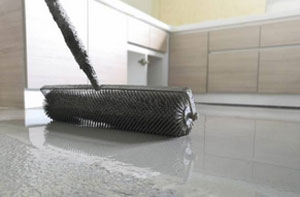 Floor Screeders Glenfield
More: Floor Refurbishment, Screed Flooring, Sand Cement Screeding, Self Levelling Screed, New Build Screeding, Bonded Screed, Coloured Screeding, Industrial Screeding, Industrial Screeding, Latex Screeding, Floor Repairs, Screed Flooring, Office Flooring, Surface Preparation, Surface Preparation, Flooring Contractors, Crack Filling, Patch Repairs, Screeding, Flowing Screed.
To read local Glenfield info look here
Floor screeding in LE3 area, and dialling code 0116.
TOP - Floor Screeding Glenfield
Floor Screed Companies - Commercial Screeding Glenfield - Self-Levelling Screed Specialists - Floor Levelling - Floor Screeders Glenfield - Residential Screeding - Floor Screeding Companies Glenfield - Screeding Services Glenfield - Screeding Quotations