
Professional Floor Screeding Coxheath Kent (ME17) Area: Whether you're renovating a property or basement, dealing with a damaged or uneven floor, or contemplating underfloor heating installation in your Coxheath home, it is essential to enlist the skills of a floor screeding expert. Screeding is a process of creating a level, smooth surface over a concrete subfloor. This provides a solid foundation for your chosen flooring material. This essential process ensures a durable and long-lasting finish for the entire floor structure, making it high-quality and resilient. By enlisting the assistance of a professional floor screeder, you can have full confidence in attaining an impeccable and long-lasting floor surface that caters to your exact needs.

FLOOR SCREEDING COMPANIES COXHEATH
Whatever size room you are remodeling, a floor screeding company in Coxheath can supply the expertise and correct working practices to establish a perfect base for your flooring. To ascertain the correct sort of screed you need, and the best way to apply it, they will do a proper assessment of your project.
They'll in addition assess if a structural engineer is necessary to make sure any point loadings, flex strength and load requirements are satisfied in accordance with the building regulations.
The skills and training that a screeding contractor brings to your project should guarantee a high quality end result and help in extending the lifespan of your floor or floors. The correct blend of screed and the techniques used in laying it are also crucial to ensure the final quality of your floor surface.
There are numerous screeding companies in the Coxheath area so see if you can get multiple price quotes for your screeding project before choosing a contractor and know to what standard of finish is it for. For domestic homes a quote will normally be provided for a Surface Regularity (SR) calculation of SR1 or SR2. SR1 is the highest standard, and while SR2 and SR3 might seem less costly at first glance, they do not guarantee a perfectly flat or even surface. This means that you may have to correct any patches that might cause issues when putting down your finished flooring material.
The regulations set out in in the British Standards BS8204 must be observed by any Coxheath floor screeding contractor and they must also be approved by the manufacturers of any specialist screeding materials (Cemfloor, Gypsol, Flowcrete etc.) to substantiate their safe working practices and competence. The testing and training of a screeding contractor by such manufacturers is underlined through this accreditation scheme, and guarantees safe working practices and reliability on any project involving their materials.
Commercial screeders in Coxheath will generally tackle screeding projects in restaurants, schools, hospitals, factories, warehouses and shopping centres.
TYPES OF SCREED
Standard Screeds - A combination of cement and sand which is acceptable for standard domestic use. 5 parts sand to 1 part cement is the typical mixture for standard screeds. Once laid this 5:1 ratio dries at a rate of one millimetre each day.
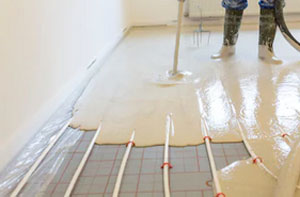
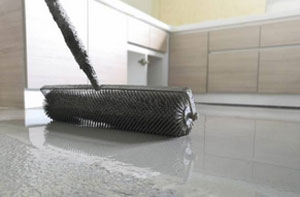
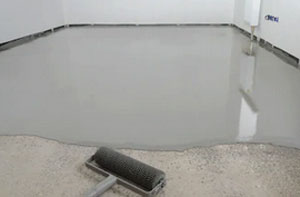
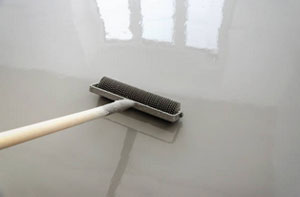
Liquid or Self-Levelling Screeds - When the highest possible standard of finish is required this solution of cement and latex is used to produce SR1 quality screed flooring. It is mainly used to provide a smooth, clean floor over a damaged or poor quality substrate and enables all types of flooring materials to be used. Even with a depth of one millimetre, the latex polymers within the screed provide a high strength surface for a variety of uses.

Industrial and Heavy Duty Screed - Developed for maximum durability and strength in places where traffic is expected to be high or heavy loading on the floor is necessary.
Polymer Screeds - A high strength flooring solution where a reduced thickness is essential. The drying times vary as outlined by proprietary product guidelines.
Advanced Drying and Fast Drying Screeds - If there is a need to progress urgently with the work because of time limitations, this screed dries much quicker than standard screeds. Drying at a rate of three to seven millimetres, subject to the mixture, they're typically a fibre reinforced type of screed and are suitable for flooring projects that have tight schedules.
Fibre Reinforced Screed - The first choice where under floor heating is being installed in residential homes in Coxheath. The increased flex and strength offered by the special fibres within this screed help protect the floor from thermal cracking and shrinkage. It has a drying rate of 1mm per day.
SCREEDING PREPARATION AND INSTALLATION
To enable the screeding to be of a high quality finish that's hard wearing and durable, time must be devoted to carefully preparing the area before any screeding material is poured. Any debris, grease, oil and paint on the original floor level can adversely affect the adhesion of the screed, and must be eradicated.
If any products were used during this stage it is important to ensure that no residues of soaps, detergents or other cleaning products are left on the floor surface and it is allowed to dry out naturally. If screeding over a cement or stone floor any cracks should be repaired to stop them from "travelling" through your screed layer and producing imperfections on the final floor surface. A competent Coxheath screeding installer will pick up on these issues during the on-site survey and make sure that all preparations are finished before pressing on with the next stages of the floor screeding process.
A damp proof membrane (DPM) will be put down once the preparation work has been done to prevent ground moisture affecting the screed and floor materials. There could be two or three layers of different thickness polythene to act as a barrier between the insulation layer and screed.
If the area is susceptible to radon gas then one additional barrier is needed to stop this harmful gas from entering from the ground. This could be just a simple air-tight membrane, or in severe situations an extraction and ventilation system is installed underneath the screed to take away any inflow of radon gas from ground level.
As soon as the floor base has been prepared and any DPMs installed, a primer or sealant is then applied. A primer helps with the screed to bond successfully to the base and different varieties exist according to which type of screed is being used. These substances need qualified contractors to apply them in the right proportions by using airless sprays and other tailor-made equipment.
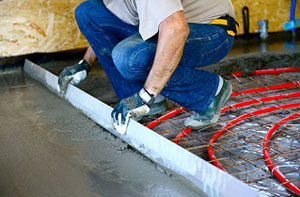
This is the time that underfloor heating can be installed and laid out in the correct manner. The heating pipes and wires are firmly mounted on insulation panels to prevent any movement and make sure that they're laid in the correct position. When skillfully installed an under floor heating system is an effective way to warm up a room and good quality screed will retain its heat, creating an even level of warmth across the floor surface.
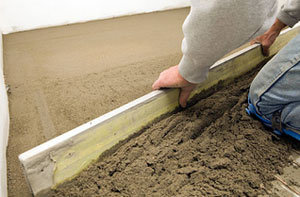
Of course, if you're not fitting under floor heating, you simply bypass this step and apply the floor screed. Your screeding contractor will have given you advice and guidance on which sort of screed is appropriate for your requirements, in line with your proposed use of the room area. Bear in mind that even advanced and quick drying screeds have a minimum of 24 hours before you are able to walk over any screeded surface and at least seventy two hours before any flooring materials can be laid. This time period is increased for heavy duty and standard screeds and the manufacture's instructions must be followed to the letter to create the best finish and longevity of the floor.
The SR standard of your screeding can be checked once it has hardened sufficiently to be walked upon. Using a two metre straight-edge the floor surface is examined for any ridges, deviations and dips in the surface of the screed.
- SR1 - Over the entire floor area, if there aren't any deviations of more than 3 millimetres from the straight-edge, then you have a top quality SR1 standard surface.
- SR2 - The normal standard flooring in industrial and commercial builds is normally SR2 and has a maximum deviation of five millimetres across the entire screed.
- SR3 - If the deviation is 10 millimetres or less the quality of the screeding is specified as SR3 and is fine for garage and utility areas.
If you need to check the floor for load bearing, a structural engineer is required to conduct the tests. The assessment will ensure your new screeding is viable for the load bearing requirements laid out in the original site survey. An assessment called the "drop hammer test" is performed on various areas of the screed layer and the outcomes recorded. The precise measurement and testing tools mean this can only be carried out by a competent structural engineer obeying the guidelines of the British Standards BS8204. (Tags: Floor Screeding Services Coxheath, Screeding Coxheath, Floor Screeding Coxheath, Floor Screed Coxheath).
Floor screeding services are available in Coxheath and also in nearby places like: West Farleigh, Boughton Monchelsea, Chart Sutton, Mockbeggar, Dean Street, Maidstone, Collier Street, Underling Green, East Barming, Benover, East Farleigh, Chainhurst, Hunton, Loose, Yalding, Linton, and in these postcodes ME17 4TB, ME17 4FE, ME17 4HL, ME17 4PD, ME17 4QA, ME17 4EG, ME17 4EJ, ME17 4FY, ME15 0QB, ME17 4NT. Locally based Coxheath floor screeders will most likely have the postcode ME17 and the telephone dialling code 01622. Checking this out will confirm you are accessing locally based floor screeding. Coxheath property owners can benefit from these and lots of other similar services.
Subfloor Repair Before Screeding
The repair of a subfloor before screeding is one of those steps that is easy to overlook, although it makes a big differance once the screed has gone down. Any cracks, loose patches, or weak spots in the base need to be sorted out first, otherwise the screed can fail or start to break up later on. Its usually a case of cleaning everything back, removing debris, and repairing any damaged areas with suitable fillers or bonding agents so that the surface is sound & stable. If there are dips or uneven sections in the subfloor, these can be levelled out during the prep work to avoid any issues further down the line. A thorough check for damp is also worth doing, since moisture can cause all sorts of trouble if it gets trapped beneath the screed. Getting the subfloor right might feel like extra work, although doing it will help the screeding to bond properly and give a smoother, longer-lasting finish overall.
Granolithic Screeding
Granolithic screeding refers to a type of flooring that consists of a mixture of cement, aggregate and sand. It is applied in a relatively thin layer and then smoothed to provide a hard-wearing, seamless and durable surface. It is typically used in industrial, commercial and public buildings where there's heavy foot or machinery traffic.
This technique is normally used in commercial and industrial buildings, high-traffic residential areas, and spaces that require abrasion and chemical resistance. The resulting surface is easy to clean, durable, and provides the ideal base for other flooring materials.
The granolithic screeding process involves preparation of the concrete sub-base, mixing the screed mixture, laying the mixture, and allowing it to cure. Proper application and curing techniques are crucial for the strength and longevity of the screed. The screed must be fully cured before any additional flooring products are laid.... READ MORE.
Screed Reinforcement
Screed reinforcement is a technique for reinforcing concrete screeds to improve their strength and durability. Screeds are thin, flat layers of concrete that are applied to a base layer to create a level surface. They find common use in building projects as flooring, but they can also be utilised as a finishing layer for walls and ceilings.
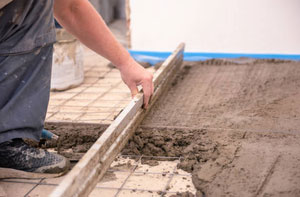
Embedding reinforcement materials, like wire, steel mesh or polypropylene fibres, into the screed mixture during installation is done to improve strength and prevent cracking. Reinforcement aids in the even distribution of weight and load on the surface, while also improving its resistance to abrasion, thermal changes and impact.
By reducing the risk of shrinkage and cracking caused by temperature or humidity changes, reinforcement improves both the durability and strength of screeds. Factors such as load capacity, finish and thickness play a role in the selection of reinforcement material for a project, which can vary according to specific requirements. Screed reinforcement is essential to maintain the quality and structural integrity of screeds, providing a reliable and long-lasting surface for various applications.
What Does Screeding Do?
In construction projects, screeding fulfills several vital roles:
- Support for Underfloor Heating Systems.
- Compatibility with Floor Finishes.
- Improving Sound and Thermal Insulation.
- Surface Protection.
- Stability and Structural Integrity.
- Load Distribution.
- Smoothing and Levelling.
- Subfloor Corrections.
All in all, the creation of a level, stable and durable floor surface is significantly influenced by the role of screeding. It ensures that the floor finish will have a solid foundation, maintain its quality and aesthetics, and withstand the demands of day-to-day use over an extended period.
Acid Etching Concrete Coxheath
The process of acid etching is often utilised to prepare concrete surfaces for finishing. A solution of acid and water is applied to the concrete during acid etching to clean and roughen-up the surface. A longer-lasting and more durable finish is achieved by enhancing adhesion for coatings or sealants through this process.

The first step involves thoroughly cleaning the concrete surface to remove all dirt, debris or grease. Once clean, the concrete surface receives an even application of the acid solution. By reacting with the concrete, the acid creates a slightly rough texture, improving the adhesion for subsequent sealants, paints, or finishes.
Due to the hazardous nature of acid, safety is crucial when acid etching concrete. To safeguard against skin and eye contact with the acid, wear protective gear comprising goggles, gloves, and a mask. It's preferable to have a professional do it.
Once the acid has completed its task, the concrete is thoroughly rinsed with water to neutralise the acid and eliminate any remaining residue. This leaves the surface prepared for the following step in the finishing process, whether it's staining, painting or sealing. (Acid Etching Concrete Coxheath)
Damp Proof Membranes
A DPM (damp proof membrane) is a material that's used in construction to prevent moisture from seeping through floors, foundations, and walls. To protect buildings from the damaging effects of rising damp, these plastic or polythene barriers are frequently installed as a preventative measure. Protecting a property from moisture-related problems like mould, structural weakening, and decay necessitates the installation of a damp proof membrane.

Although Damp proof membranes are generally applied in new constructions, they can also be installed during renovation projects. To prevent moisture penetration, they are usually embedded within walls or laid under concrete floors. This works to keep the interior of a building dry, avoiding issues such as peeling paint, warped wooden, floors or damp patches.
Different DPMs are available to meet the unique requirements of various properties. Certain DPMs need to be installed with a bonding agent, whereas others are self-adhesive. The choice of membrane type relies on considerations such as the level of moisture risk, the building's location, and the form of construction.
A damp proof membrane provides an efficient and straightforward solution to moisture issues. It forms a long-lasting that ensures the safety of homes and buildings in Coxheath from the detrimental effects of moisture seepage and damp. To ensure the structure remains dry and fully protected, installing a damp proof membrane is a crucial step, whether you're constructing a new house in Coxheath or renovating an old one. (Damp Proof Membranes Coxheath)
Concrete Floor Moisture Testing
Concrete floor moisture testing is one of those jobs that often gets pushed aside, although it can save a lot of hassle later on once the screeding or flooring goes down. Fresh or existing concrete can hold onto moisture longer than you might expect, and if that isn't picked up early, it can lead to problems like poor screed bonding, lifting, or damp patches showing through finished floors. The process usually involves checking moisture levels with specialist tools, whether that is a surface meter or a more in-depth test to see what is going on below. It isn't just about ticking a box, it helps to decide whether the floor is ready, or if it needs more time to dry out. Skipping this step can cause delays further down the track, therefore getting a clear moisture reading upfront will make the whole screeding job run a lot smoother.
Screed Floor Sealing Coxheath
An important process for enhancing and protecting the durability of screed floors is screed floor sealing, which is best performed by professionals. A mixture of cement and sand, screed creates a level, smooth surface that's ideal for flooring. However, to maintain its integrity and appearance, sealing is necessary. A professional will apply a high-quality sealant that penetrates the screed, providing a protective barrier against wear, stains and moisture.

Cleaning the screed floor comprehensively to eliminate any dirt, dust or debris is the starting point in the sealing process. After the floor is clean and dry, the professional evenly applies the sealant across the surface. By doing this, the sealant covers every area of the floor, filling in any tiny cracks or pores. Time is usually needed for the sealant to dry out and completely cure, which forms a durable and long-lasting protective layer.
Not only does having a professional seal your screed floor extend its lifespan, but it also improves its appearance. By giving the floor a polished, smooth finish, the sealant makes cleaning and maintenance simpler. Preventing damage from heavy footfall and spills, sealing also makes a sound investment for both commercial and domestic properties. (Screed Floor Sealing Coxheath)
Latex Floor Screeds
It is better to use a latex self-levelling screed when a level of flexibility is needed in a floor's surface. Latex screeds come in 2 parts - a bottle and a bag - with the bottle containing liquid latex and the bag containing a cement based powder. The water that is normally used in a screed mix is replaced by the latex liquid, meaning that it's more flexible than standard screeds, and quicker drying.
This latex compound is used for levelling subfloors in advance of the laying of the final decorative covering. Suitable for sub-floors of sand/cement, concrete, asphalt, stone tiles and wood, this screed gives a perfect surface for the application of flooring adhesives which is also durable and smooth. Even when there is a bit of movement in your sub-floor, this type of floor screed will provide a flexible, crack-free finish.
With "floating" screeds, for instance when a screed is being laid on the top of a layer of either acoustic or thermal insulation, latex floor screeds won't be appropriate. Floating screeds with a thickness of 50-75mm are often used on top of underfloor heating.
Related Tasks

There are a number of different tasks that can be undertaken by your local Coxheath floor screeding company including screed aftercare, decorative floor screeding Coxheath, floor screeding, screed floor removal, commercial screeding, subfloor repair, cellar screeding, underfloor insulation, sand screeding, liquid screeding, floor renovation, coloured floor screeding Coxheath, floor moisture testing Coxheath, waterproof screeding in Coxheath, unbonded screed in Coxheath, resin floor screeds Coxheath, bonded screed, professional floor levelling services in Coxheath, structural screeds, garage floor screeding, pumped screed installation, floor smoothing compounds Coxheath, office floor screeding, sand and cement floor screed, floor preparation services, latex screed in Coxheath, external screeding in Coxheath, and lots more floor screeding tasks. Listed are just a small portion of the activities that are conducted by those installing floor screeding. Coxheath companies will tell you about their entire range of screeding services.
The Tools You'll Need For Floor Screeding
- Knee Protectors
- Spiked Roller
- Spirit Level
- Spade
- Floor Profile
- Wheelbarrow
- Float
- Straight Edge
- Trowel
- Tape Measure
- Gloves

Floor Screeding Near Coxheath
Also find: Linton screeding services, Boughton Monchelsea screeding services, Mockbeggar screeding services, Chainhurst screeding services, Loose screeding services, Chart Sutton screeding services, Benover screeding services, Maidstone screeding services, East Barming screeding services, Collier Street screeding services, Underling Green screeding services, Hunton screeding services, Yalding screeding services, West Farleigh screeding services, Dean Street screeding services, East Farleigh screeding services and more. The majority of these villages and towns are catered for by companies who do screeding. Coxheath householders can get price quotes by going here.
Floor Screeding Services Coxheath

- Liquid Screeds
- Polished Screed Floors
- Floor Insulation
- Domestic Floor Screeding
- Fibre Reinforced Floor Screeding
- Screed Calculator Service
- Floor Screeding
- Cheap Screeding
- Industrial Floor Screeding
- Underfloor Heating Installation
- Fast-Dry Screeding
- Floor Damp Proofing
- Floor Levelling
- Floor Screeding Advice

Other Trades Coxheath Kent: Coxheath home improvements usually require the skills of many different craftsmen, and even though you're currently focused on finding screeding in Coxheath, vinyl flooring in Coxheath, a stonemason in the Coxheath area, linoleum flooring in your locality, a heating engineer in your locality, a plasterer in the local area, a floor tiler in Coxheath, a roofer in the area, an odd job man in your locality, an electrician in the area, a carpenter/joiner in Coxheath, an underfloor heating specialist in the local area, SKIP HIRE Coxheath, waste removal in your locality, a carpet layer in Coxheath, gutter cleaning in your locality, a home improvement expert in the area, could also be needed at some stage during your project.
 Floor Screeding Coxheath
 Screeding Near Me
 Floor Screeders Coxheath
More: Subfloor Preparation, Lightweight Screed, Screed Repairs, Warehouse Flooring, Coloured Screeding, Screeding Specialists, Commercial Screeding, Domestic Screeding, Coloured Screeding, Warehouse Flooring, Commercial Screeding, Latex Screeding, Surface Levelling, Floor Screeders, Joint Sealing, Damage Repairs, Screed Flooring, Floor Screeding, Commercial Screeding, Flooring Contractors.
For local Coxheath information check here
Floor screeding in ME17 area, (dialling code 01622).
TOP - Floor Screeding Coxheath
Commercial Screeding Coxheath - Floor Levelling Services - Residential Screeding - Screeders Coxheath - Floor Screeding Coxheath - Floor Screeding Quotations - Floor Screeding Services Coxheath - Screeding Coxheath - Self-Levelling Screed Specialists